Clevis Eyes — Types V & VD
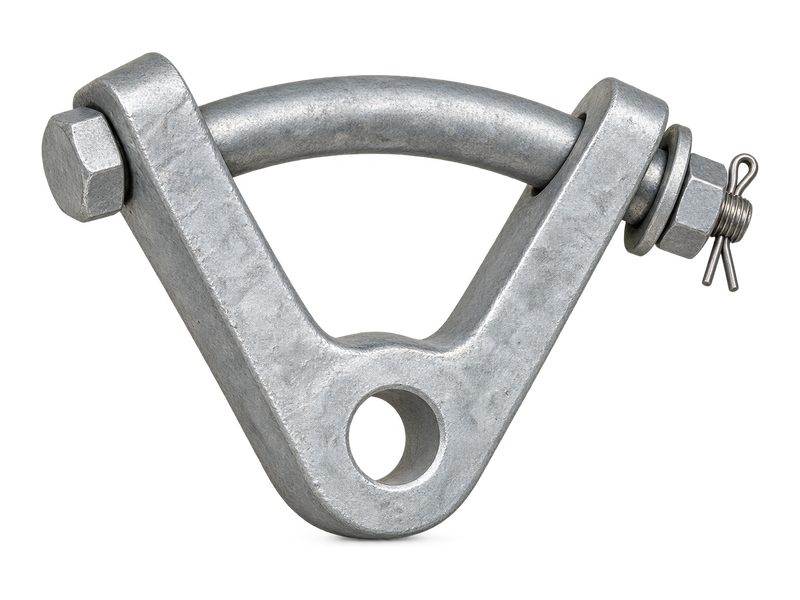
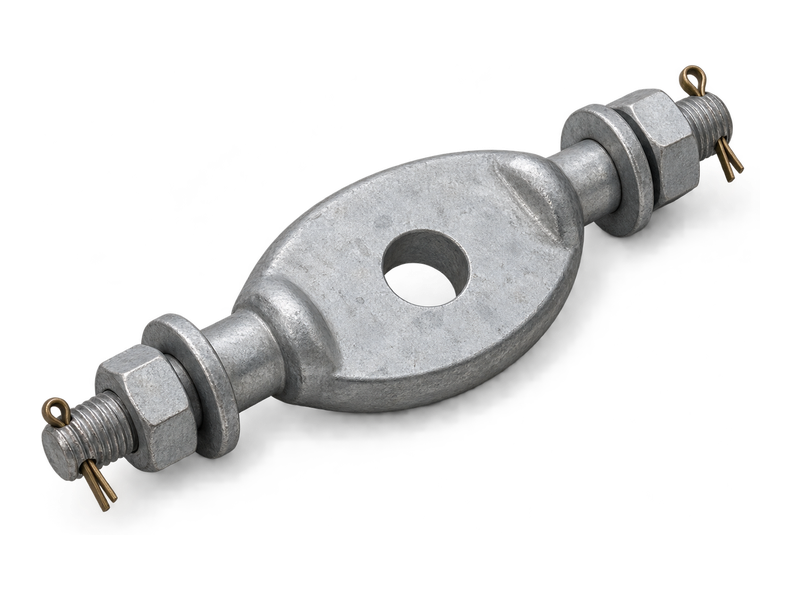
V and VD clevis eyes are angled link fittings with two upper bolted connection positions and a lower eye. Their angled layout brings two inclined connections to a common eye within an overhead line hardware assembly. V-7 and VD-7 have the same angle, height and rated failure load, but different b dimensions and masses, as shown in Datasheet. This makes the exact body version an important part of selection. Buyers can compare the reference geometry, identify the adjoining fittings and define the complete assembly loading before choosing the required model.
Product Overview
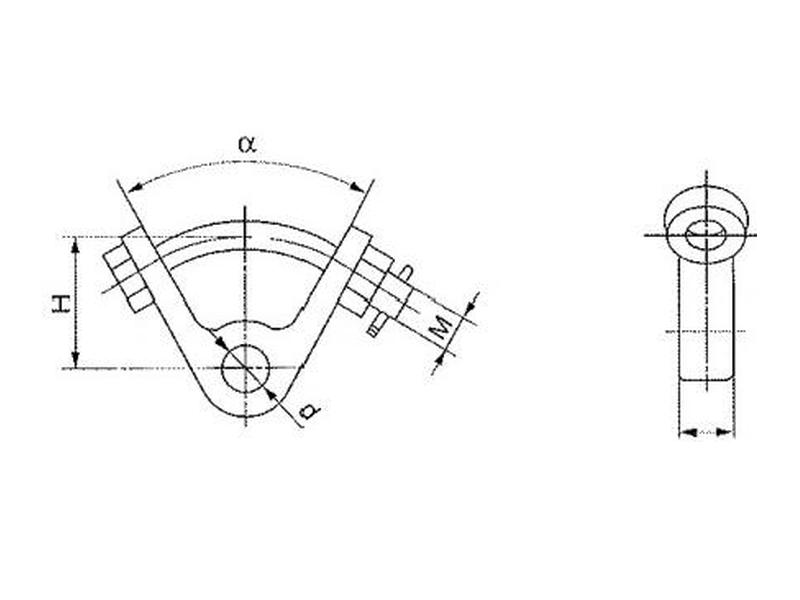
The body has two inclined upper connection axes and one lower eye. V and VD clevis eyes for angled link assemblies are therefore selected around the three connection positions together, including the eye diameter d, bolt designation M, height H, b dimension and included angle.
Datasheet lists V-7 and VD-7 as separate body versions. Their shared 70 kN rating is a rated failure load; it does not define the allowable load on each inclined connection or an equal load split. The complete loading arrangement remains part of assembly selection.
Key Features
- Angled upper connections: Two inclined bolted positions connect the adjoining upper members.
- Common lower eye: One drilled eye provides the lower connection to the next matching fitting.
- Two body versions: V-7 and VD-7 retain different b dimensions and masses for model comparison.
- Defined angular layout: The included angle α in Drawing defines the geometry of the adjoining links.
Drawing
- Angled overhead line link assemblies: installed where two inclined upper members connect to the two bolted positions and an adjoining lower fitting connects through the eye.
- Insulator string connection hardware: used at the V or VD junction position shown in a string assembly drawing, linking the inclined members to the common lower connection.
Description
Clevis Eyes (Type V&VD)
| Catalog No. | Dimensions(mm) | Rated Failure Load(kN) | Weight(kg) | ||||
|---|---|---|---|---|---|---|---|
| d | M | b | H | a | |||
| V-7 | 18 | 20 | 40 | 75 | 60° | 70 | 1.8 |
| VD-7 | 18 | 20 | 28 | 75 | 60° | 70 | 1.4 |
Request the Complete Data Sheet
From Production to Delivery
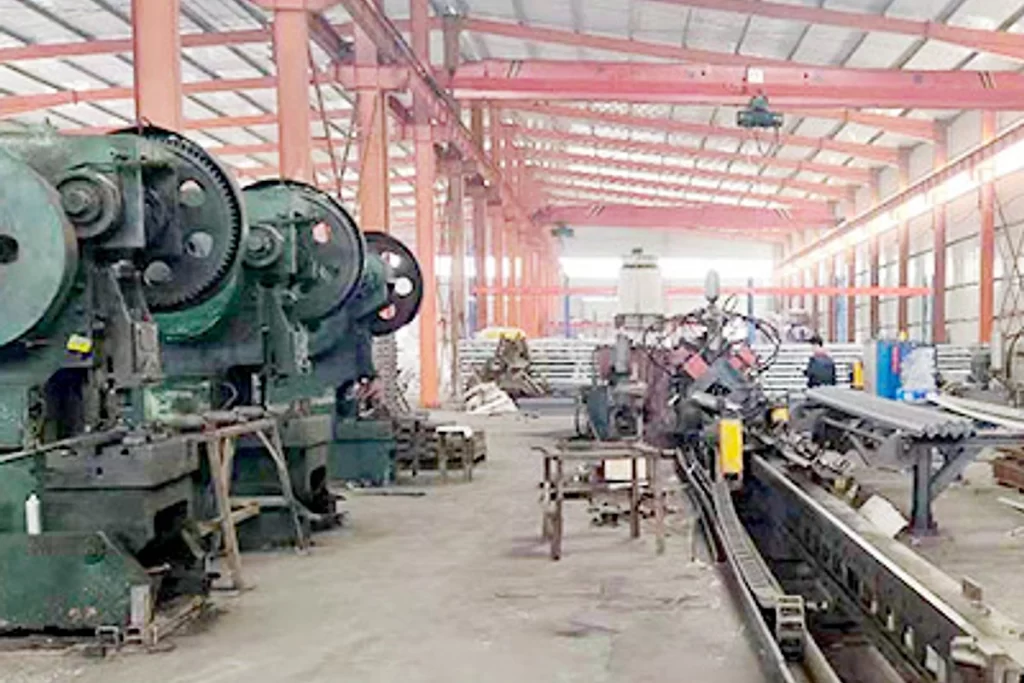
From raw material preparation to final shipmen, every stage is caretuly controled to ensure consistent conductor quality, reliable pertormance,and sae delivery. Our roduction,
inspection, packaging, and logistics processes are managed in accordance with applicable standards and project requirements.
Production
The general workflow forms the angled body and prepares the two upper bolt connections and lower eye. Finishing and hardware assembly follow the selected V or VD version.
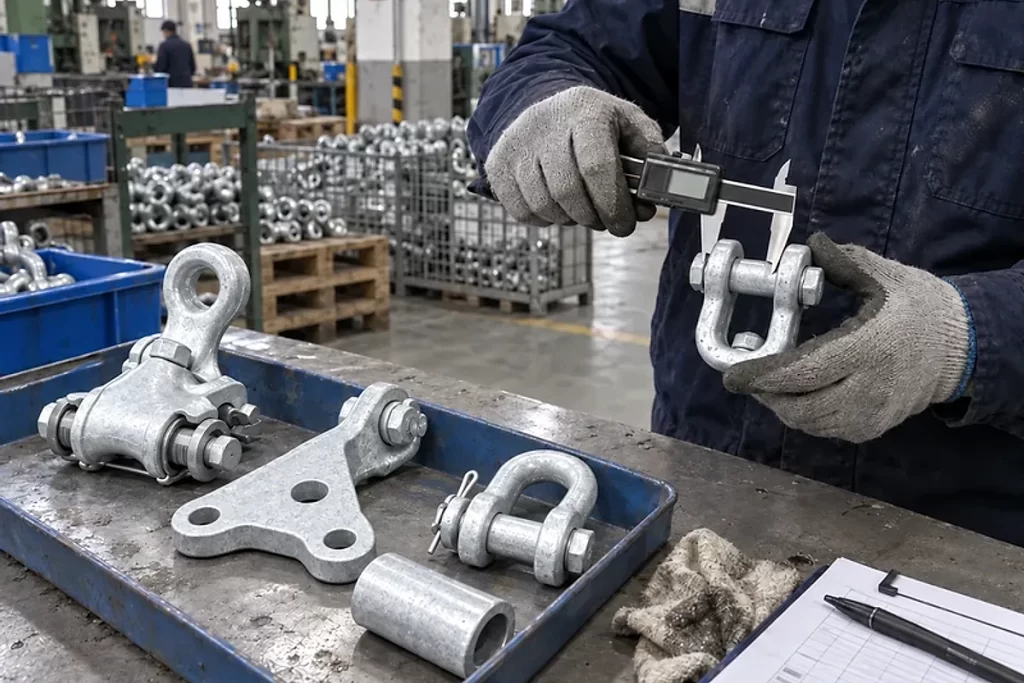
Inspection
Geometrical inspection covers the included angle, eye, upper connections and b dimension. Mechanical verification needs a defined loading arrangement for the complete fitting.
Packaging
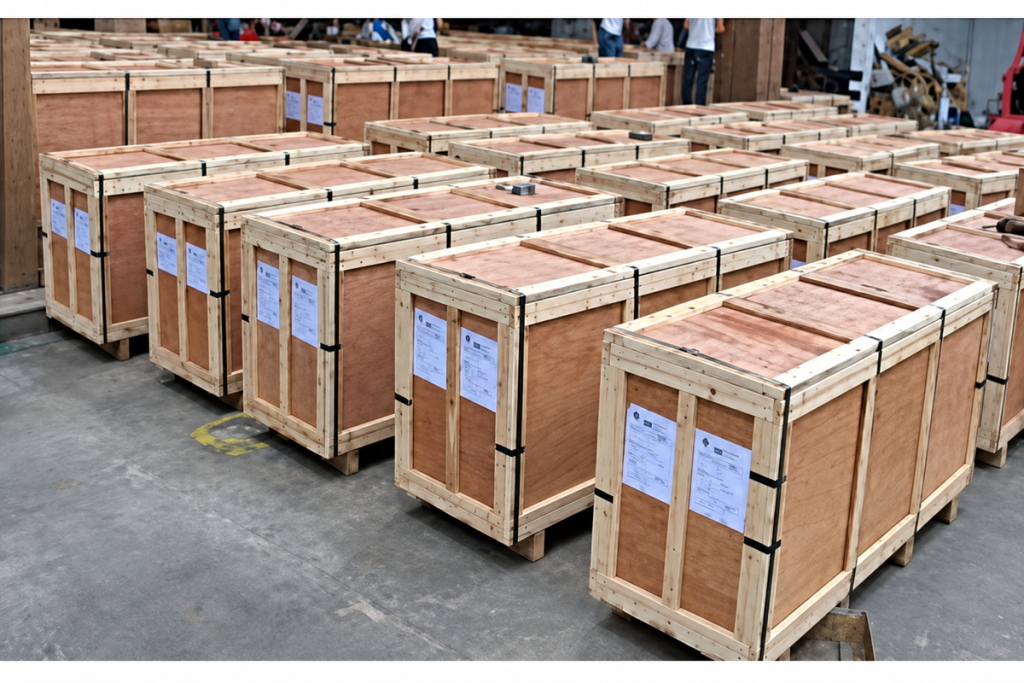
Packing protects the projecting connection ends and keeps V and VD versions separately identified with their specified hardware.
Shipping
Dispatch paperwork records the exact body version and model quantity, with the relevant assembly references available for site identification.
Frequently Asked Questions
What is the difference between V-7 and VD-7?
Datasheet gives b as 40 mm for V-7 and 28 mm for VD-7, with masses of 1.8 kg and 1.4 kg respectively. Other listed values are the same. The different b values in Datasheet should be compared together with the mating arrangement.
Does 70 kN mean that each upper connection can carry 70 kN?
No. The 70 kN value in Datasheet is a rated failure load, not a separate working-load rating for each upper connection. Branch forces depend on the assembly geometry and loading. The required technical record must identify the complete loading case and the declared rating.
Are these fittings automatically suitable for every V-string arrangement?
No. A V-shaped layout alone does not establish fit. The connection angle, adjoining member dimensions, lower eye interface and load case must correspond to the intended assembly. No universal V-string compatibility is specified.
What information is needed to enquire about Clevis Eyes — Types V & VD?
Identify V-7 or VD-7 and provide the quantity, destination and assembly drawing. Show both upper connections, the lower eye interface, required angle and loading case, together with any required test documentation.
Request for Free Consultation
Contact Information
Send us your cable requirements and our team will respond quickly with product recommendations, technical support and quotation details.