Right-Angle Clevis Links — Type Z
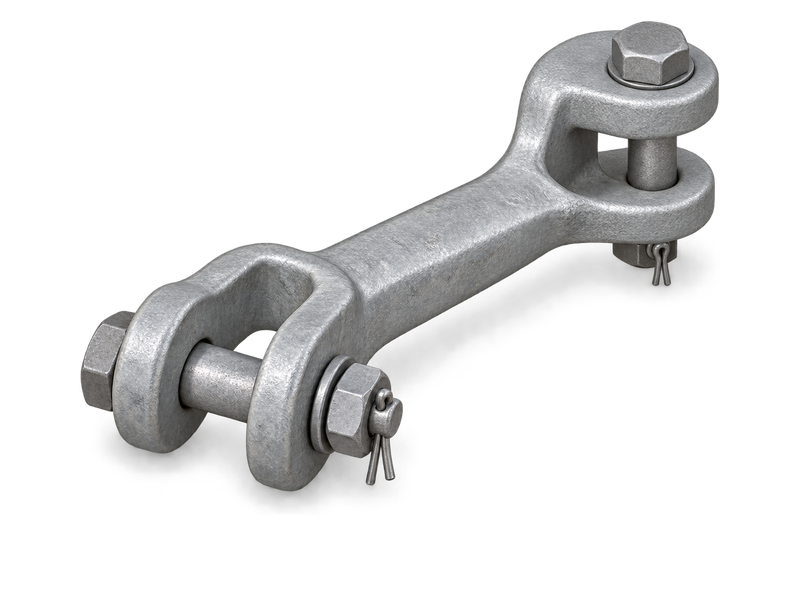
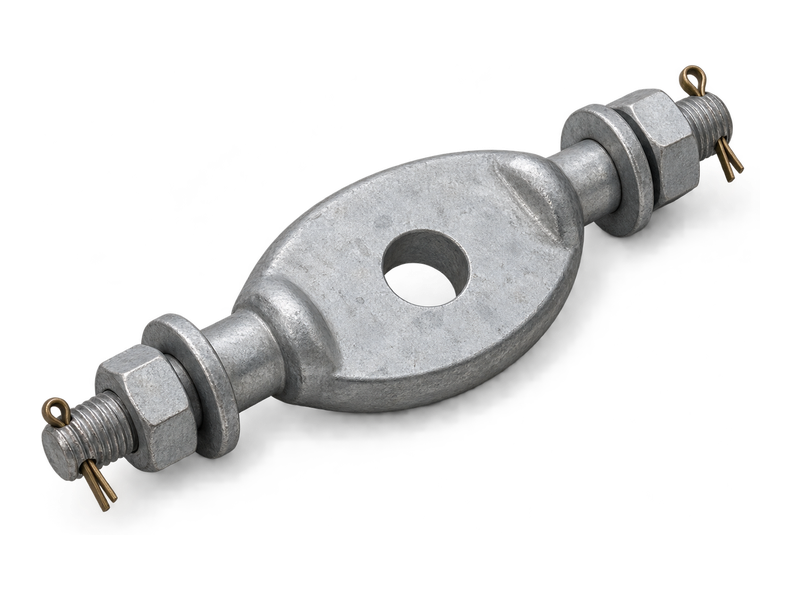
Z type clevises connect two tongue-ended fittings where the pin axes need to lie at right angles. Their paired clevis openings change the connection orientation within an overhead line insulator string while maintaining a bolted mechanical link. The Z series includes several opening widths and connection lengths, allowing the fitting to be matched to adjoining plates and assembly space. Selection centres on both clevis widths, the bolt designation, pin spacing and required mechanical rating. These right-angle clevis fittings suit assemblies that need an orientation change between adjacent links.
Product Overview
The two clevis ends sit in perpendicular planes. This geometry lets adjoining tongue fittings take different connection orientations without introducing a separate ball-and-socket joint. Match C1 and C2 to the mating tongues, then check bolt designation M, centre distance h and movement clearance against the assembly drawing.
The steel parts are hot-dip galvanised and the cotter pins are stainless steel. Z type clevises for insulator strings provide a mechanical connection; the complete string design determines electrical clearances and insulation requirements.
Key Features
- Perpendicular end connections: Two clevis ends turn the connection plane between adjacent tongue fittings.
- Two opening dimensions: Separate C1 and C2 dimensions support checks at both mating interfaces.
- Length options: Different centre distances accommodate the spacing required within the fitting assembly.
- Retained bolt connections: The bolt, nut and cotter-pin arrangement secures the two connections.
Product Applications
- Insulator string link assemblies: installed between compatible tongue-ended fittings where the adjacent connection planes differ.
- Tower-side and clamp-side hardware: connects adjoining links within suspension or tension string assemblies that incorporate a right-angle connection.
Technical Specifications
Z Products - Clevis
| Catalog No. | Dimensions(mm) | Rated Failure Load (kN) | Weight(kg) | |||
|---|---|---|---|---|---|---|
| C1 | C2 | M | h | |||
| Z-7B | 20 | 18 | 16 | 80 | 70 | 0.7 |
| Z-10B | 20 | 20 | 18 | 80 | 100 | 0.9 |
| Z-16C2 | 26 | 26 | 24 | 170 | 160 | 3.8 |
| Z-50 | 44 | 44 | 42 | 120 | 500 | 8.6 |
| Z-32G | 32 | 32 | 30 | 100 | 320 | 4.8 |
| Z-42G | 36 | 38 | 36 | 110 | 420 | 5.2 |
Request the Complete Data Sheet
From Production to Delivery
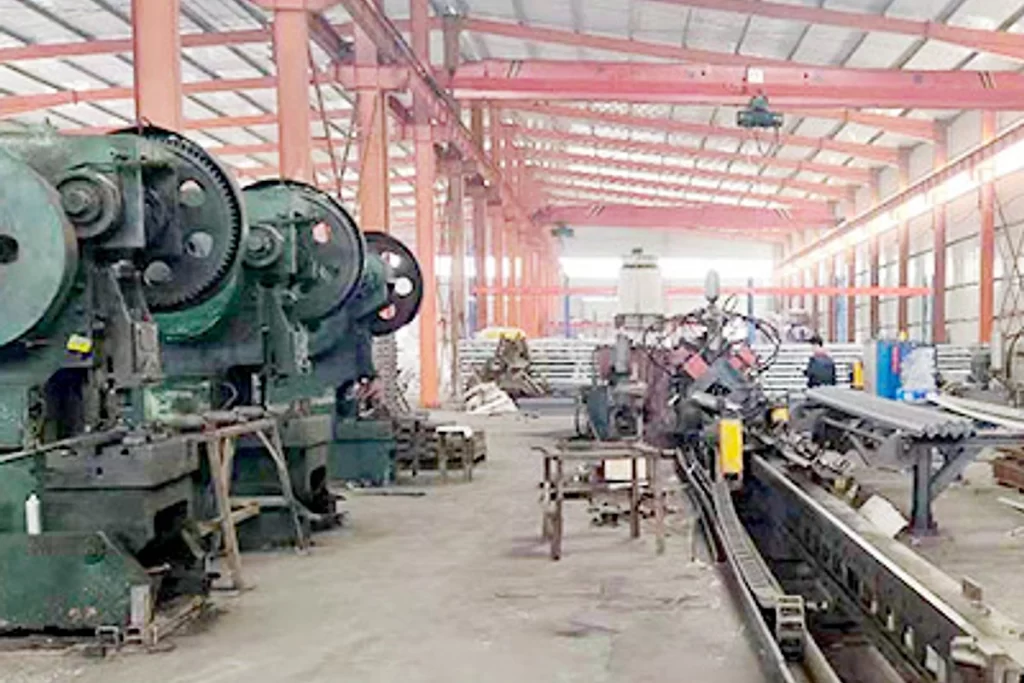
From raw material preparation to final shipmen, every stage is caretuly controled to ensure consistent conductor quality, reliable pertormance,and sae delivery. Our roduction,
inspection, packaging, and logistics processes are managed in accordance with applicable standards and project requirements.
Production
The general production sequence covers forming the steel body, preparing the two perpendicular clevis ends and fitting the specified bolt hardware after surface treatment.
Inspection
Inspection focuses on the two opening widths, bolt fit, centre distance and end orientation. Coating and mechanical checks follow the agreed inspection plan.
Packaging
Packing keeps the bolts, nuts and cotter pins associated with each model and protects the clevis ends from contact damage.
Shipping
Dispatch records identify each model and drawing revision, so the receiving team can distinguish fittings with similar model names.
Frequently Asked Questions
How does a Z type clevis differ from a straight double strap?
A Z fitting has clevis connections in perpendicular planes. A P double strap uses two parallel plates with parallel end bolts. The choice follows the orientation of the adjoining connections, as well as their dimensions and loads.
Can a Z type clevis connect directly to a ball-ended insulator?
A ball end requires a matching socket fitting. A Z type clevis connects through a bolt to a compatible tongue. A socket clevis has a socket at one end and a clevis at the other, so an intermediate tongue fitting may be required to connect it to a Z type clevis.
Is the model number enough when replacing an existing fitting?
No. Compare the existing fitting with the replacement drawing, including both opening widths and centre distance. A photograph showing both ends helps identify the arrangement when the original drawing is unavailable.
What information is needed to enquire about Right-Angle Clevis Links — Type Z?
Include the Z model or existing fitting drawing, C1 and C2, bolt designation, centre distance, required mechanical rating and quantity. Add an assembly sketch showing the orientation of the two mating tongues and the delivery destination.
Request for Free Consultation
Contact Information
Send us your cable requirements and our team will respond quickly with product recommendations, technical support and quotation details.